



What Your HVAC System Has to Do with Earth Day (And Your Energy Bills)
April 22, 2026
Category: General,
There’s a certain kind of optimism that shows up every Earth Day.
You might think about planting something. Maybe switching to reusable bags. You consider rinsing out that peanut butter jar before recycling it… then decide that’s a problem for future you.
All good things.
But meanwhile, tucked away in your attic, crawlspace, or backyard, your HVAC system is quietly doing its own thing. No speeches. No awareness campaign. Just running… and running… and in some cases, burning through energy like it’s trying to win a contest no one signed it up for.
It’s not dramatic about it. That’s the problem.
The Biggest Energy User You Don’t Think About
Most homeowners don’t realize this, but your heating and cooling system is one of the largest energy users in your entire home.
We’re talking about a system that runs in the background every day, adjusting temperatures, managing airflow, and trying to keep things comfortable without much input from you.
When it’s working well, you don’t notice it.
When it’s not?
You notice the electric bill first.
Earth Day is a good time to ask a simple question:
Is your system running efficiently… or just running?
Older Systems Don’t Break. They Fade.
Here’s where things get a little sneaky.
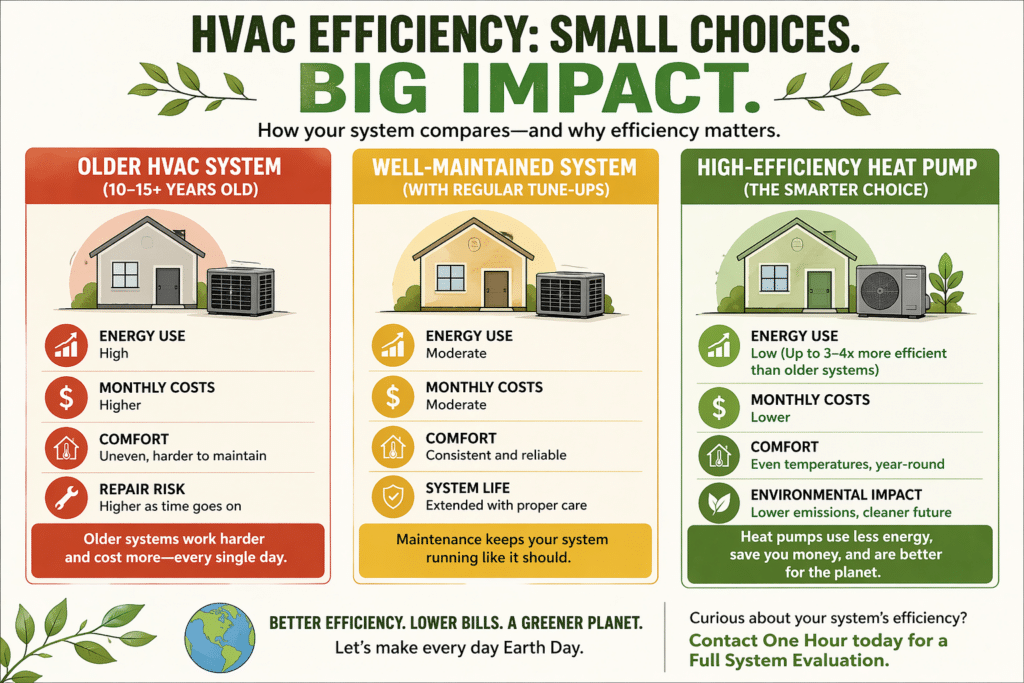
HVAC systems don’t usually fail all at once. They don’t send a polite notice or a warning email. They just slowly lose efficiency over time.
A system that’s 10 to 12 years old might still turn on and cool the house. From the outside, it looks fine.
But behind the scenes, it’s working harder than it used to.
Running longer cycles.
Using more energy.
Struggling to keep temperatures even from room to room.
It’s a bit like driving a car with the parking brake slightly on. You’ll still get where you’re going. You’ll just use more gas doing it.
Efficiency Isn’t Just About Energy. It’s About Comfort.
When a system loses efficiency, it doesn’t just show up on your bill.
It shows up in how your home feels.
Rooms that never quite get comfortable.
Air that feels a little sticky in the summer.
A system that seems like it’s always running but never quite catching up.
That’s not just age. That’s strain.
And strain leads to wear. Wear leads to repairs. And repairs have a way of showing up at the worst possible time.
Usually on the hottest day of the year. Like clockwork.
Maintenance: The Part Most People Skip (Until It’s Too Late)
A lot of efficiency loss comes down to simple things.
Dirty filters.
Dust buildup.
Airflow restrictions.
Nothing dramatic. Just enough to make your system work harder than it should.
Routine maintenance helps clean things up, restore performance, and catch small issues before they turn into bigger ones.
It’s not about tuning up for the sake of it. It’s about making sure your system isn’t wasting energy doing a job it could do more easily.
The Earth Day Conversation: Heat Pumps
If Earth Day had a spokesperson in the HVAC world, it would probably be the heat pump.
And for good reason.
Traditional systems create heat. Furnaces burn fuel. Electric heaters generate warmth.
Heat pumps take a different approach. They move heat instead of creating it.
That shift makes a big difference.
It’s the difference between carrying groceries up the stairs one bag at a time… and using the elevator.
Same result. A lot less effort.
Heat pumps can heat and cool your home using significantly less energy, especially in moderate climates. And because they run on electricity, they reduce reliance on fossil fuels.
For many homeowners, they also replace both the furnace and the air conditioner in one system.
“But Do They Work When It’s Cold?”
Fair question. It comes up a lot.
Modern heat pumps are built to handle colder temperatures much better than older models. And in homes where winter really pushes back, systems can be paired with a backup heat source to keep things comfortable no matter what.
The goal isn’t to force one solution. It’s to find the right balance for your home.
Small Changes Still Matter
Not every step toward efficiency requires a system upgrade.
There are a few simple things homeowners can do that make a real difference:
Change your air filter regularly
Keep the outdoor unit clear of leaves and debris
Make sure vents aren’t blocked by furniture or rugs
Pay attention to rising energy bills or uneven temperatures
These are small moves, but they help your system do its job without extra strain.
Knowing When It’s Time to Rethink Your System
At some point, every system reaches a stage where it’s working harder than it should.
If your system is over 10–15 years old, needs frequent repairs, or just isn’t keeping up like it used to, it might be time to take a closer look.
Not necessarily replace it tomorrow. Just understand where things stand.
Because the longer an inefficient system runs, the more it costs you—month after month.
A Simple Earth Day Takeaway
Earth Day doesn’t have to mean a big lifestyle overhaul.
Sometimes it just means paying attention to what’s already in your home.
Your HVAC system has a bigger impact than most people realize. On your comfort. On your energy use. On your monthly bills.
Getting it checked, maintained, or even just understood a little better is a solid step in the right direction.

If You’re Curious About Your System, We’re Here
If you’ve ever wondered how efficient your system really is, or whether a heat pump makes sense for your home, it’s worth having a conversation.
At One Hour Heating & Air Conditioning, we take the time to look at how your system is actually performing, explain what we see in plain language, and help you understand your options.
No pressure. No guesswork. Just clear answers so you can make the right call for your home.
And if everything’s running great? We’ll tell you that too.
That’s a good Earth Day outcome either way.