



Why Heating Systems Fail in the Coldest Month
January 21, 2026
Category: General,
How to Avoid the Mid-Winter Breakdown
Your heating system might limp along in November. It might even behave itself through December. But January? January is when the gloves come off. Cold snaps get sharper. Nights get longer. And your heating system stops getting breaks.
That’s why so many breakdown calls happen right in the heart of winter. Not because systems suddenly fail, but because January exposes every weakness that’s been quietly building for years.
The good news? Most mid-winter breakdowns don’t come out of nowhere. The warning signs are usually there long before the heat goes out.
Let’s talk about why January is so hard on heating systems, and what homeowners can do to stay ahead of it.
Constant Run-Time Wears Systems Down
In milder months, your system cycles on and off. It heats the house, shuts down, and gets a breather. January doesn’t allow that luxury.
When temperatures stay low all day and night, your heater runs longer and more often. Older systems feel this the most. Parts that were already worn now work nonstop. Motors run hotter. Components that used to rest between cycles don’t get the chance.
It’s a lot like an older car on a long road trip. It might make it, but every mile adds stress. If something’s borderline, January is when it finally gives up.
The Warning Signs Homeowners Miss
Most heating systems don’t fail quietly. They complain first. The problem is, those complaints are easy to ignore when the heat still turns on.
Some of the most common early warning signs include:
- The system running longer than it used to
- Heat that feels weaker or slower to arrive
- New noises, even if they’re subtle
- A thermostat that seems to need constant adjusting
Individually, these don’t always feel urgent. Together, they paint a pretty clear picture. Your system is working harder to deliver the same comfort, and that extra strain adds up fast in January.
Why Uneven Rooms Show Up in Deep Winter
You might not notice uneven temperatures in fall. In January, they become impossible to ignore.
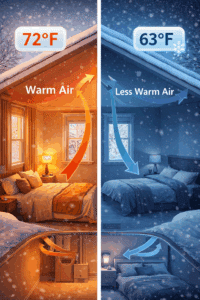
One room feels fine. Another feels like a walk-in freezer. That’s not random. Deep winter demands expose airflow issues, duct limitations, and aging equipment that can’t keep up evenly anymore.
When a system is struggling, it prioritizes survival over balance. Warm air doesn’t always make it to the farthest rooms. Bedrooms over garages, bonus rooms, and upstairs spaces usually feel it first.
Uneven comfort isn’t just annoying. It’s often an early sign the system is nearing its limits.
Dry Winter Air Makes Everything Feel Worse
January isn’t just cold. It’s dry.
Cold outdoor air holds very little moisture, and when it’s heated and circulated through your home, indoor air can become uncomfortably dry. That dryness makes your home feel cooler than it actually is, even when the thermostat says otherwise.
Dry air can lead to:
- Static shocks
- Dry skin and scratchy throats
- Trouble sleeping
- A constant urge to turn the thermostat higher
When homeowners crank up the heat to compensate, the system works even harder. Comfort drops. Energy use climbs. Wear and tear increases.
This is where comfort issues get blamed on the heater, when the real issue is how the system is performing as a whole.
Why Guesswork Fails in January
When a system struggles mid-winter, some homeowners look for the quickest fix. A part swap. A tweak. A guess.
That’s fine until it’s not.
Heating systems are complex. January doesn’t leave room for guesswork. A “Chuck in a truck” approach might get heat back temporarily, but it often misses the deeper issue. And missed issues have a habit of coming back at the worst possible time. Usually at night. Usually on the coldest weekend of the year.
Professional evaluations focus on how the entire system is handling winter demand, not just what broke today.
The Smarter Way to Avoid a Mid-Winter Breakdown
January isn’t the month to roll the dice.
A winter system evaluation isn’t about scare tactics or pushing replacements. It’s about understanding how your system is coping with peak demand and catching small problems before they turn into emergency calls.
At One Hour Heating & Air Conditioning, we see this every winter. Homeowners who plan ahead stay warm. Homeowners who wait often end up calling when the system has already tapped out.
If your heater is older, running constantly, heating unevenly, or just feels different this winter, it’s worth a closer look.
Call One Hour before a breakdown forces the conversation. You’ll get clear answers, real explanations, and service that shows up on time, treats your home with respect, and helps you get through winter without surprises.
Because January will test your heating system either way. The question is whether you’re ready for it.